Do you feel overwhelmed by academic demands and endless assignments? Discover how implementing strategic productivity hacks can instantly transform your educational journey into a focused, calm experience.
This comprehensive guide explores how targeted systems reduce stress and improve learning outcomes. You will discover actionable frameworks, expert insights, and practical methodologies that replace chaos with structured calm, allowing students and educators to achieve peak academic performance effortlessly.
The Intersection of Calmness and Educational Success

Education often feels like a race against time. Students and educators constantly juggle assignments, lesson planning, extracurricular activities, and personal responsibilities. However, treating education as a high-speed sprint inevitably leads to academic burnout and diminished returns. True academic excellence requires a foundation of calmness and intentionality. By adopting specific productivity hacks, you can shift from a reactive state of constant stress to a proactive state of focused learning.
When you prioritize calmness, your brain processes information more efficiently. Stress hormones like cortisol actively interfere with memory retention and higher-order thinking. Therefore, reducing stress is not just a wellness initiative; it is a fundamental requirement for effective education. The right approach allows you to engage deeply with complex material without feeling overwhelmed.
Integrating productivity hacks into your daily routine helps create an environment where focus thrives naturally. Rather than relying on sheer willpower, you build systems that support sustained attention. This shift in methodology fundamentally changes how you experience learning, making it a sustainable and enjoyable pursuit rather than a relentless chore.
Foundational Principles for Focused Learning
To achieve meaningful results in education, you must establish a strong foundation. You cannot simply apply a few surface-level tricks and expect long-term transformation. Real change requires a deep understanding of how your environment and your mind interact.
Environmental Design
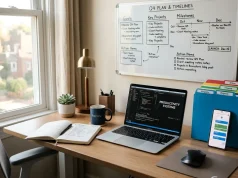
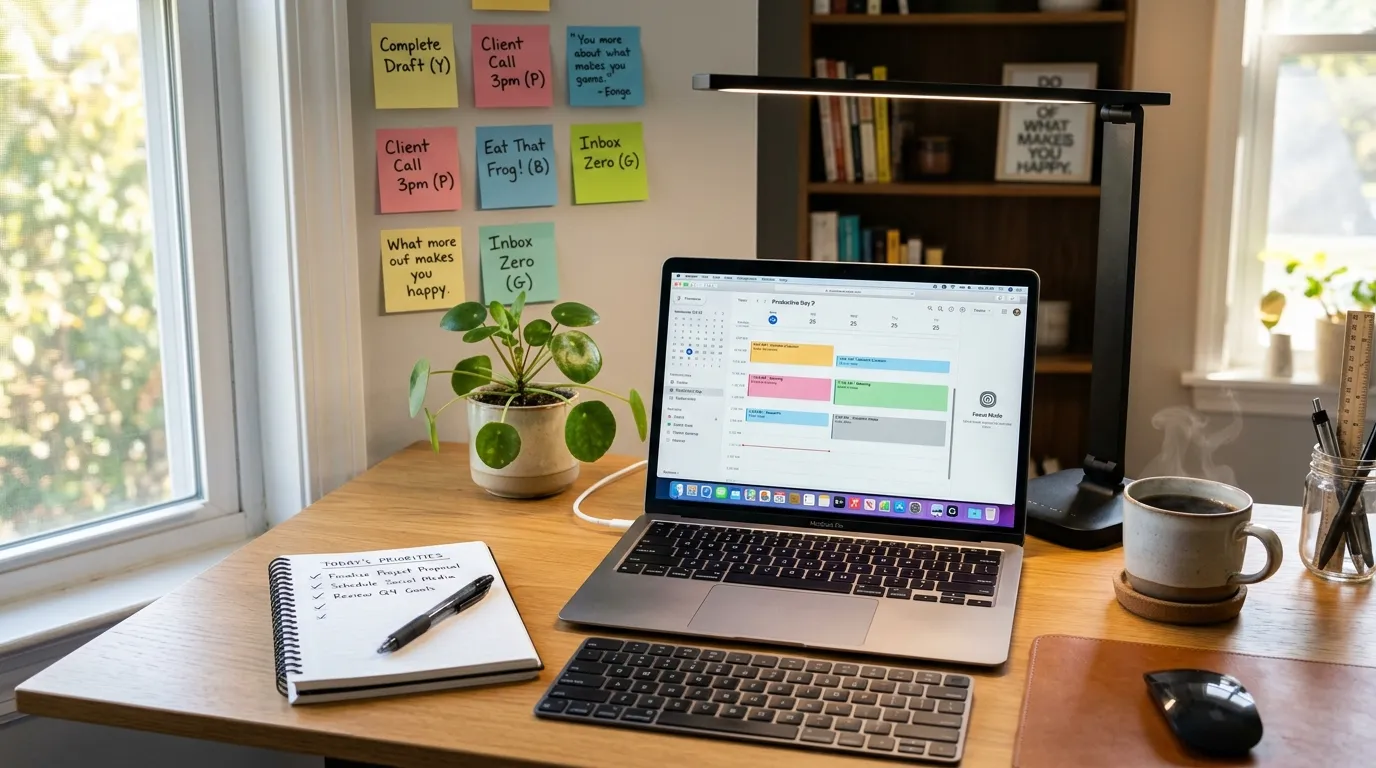
Your physical surroundings dictate your mental state. A cluttered, noisy environment fractures your attention and increases mental friction. Designing a dedicated workspace is one of the most effective productivity hacks available. Ensure your study area has adequate lighting, ergonomic seating, and minimal visual distractions.
Keep only essential materials within arm’s reach. By removing non-essential items, you eliminate micro-decisions about what to look at or interact with. This approach drastically improves your ability to maintain focus over extended periods. You train your brain to associate this specific physical space entirely with deep, uninterrupted work.
Managing Mental Resources
Your brain has a limited capacity for processing new information simultaneously. Effective cognitive load reduction ensures you do not overwhelm your working memory. Break complex subjects into smaller, digestible components.
When you attempt to learn too much at once, you experience mental fatigue. Instead, use frameworks that organize information logically. This structural approach allows your brain to categorize and store data more efficiently. Implementing these productivity hacks ensures you retain information long after the study session ends.
Actionable Methods for Students and Educators

Theoretical knowledge only becomes valuable when applied. Implementing structured routines transforms abstract goals into tangible results. Here are specific methodologies that dramatically improve educational outcomes.
The Pomodoro Technique Adapted for Schools
The Pomodoro Technique remains a staple among productivity hacks for good reason. It balances intense focus with necessary recovery. Traditionally, this involves twenty-five minutes of work followed by a five-minute break. For younger students, you might adjust this to fifteen minutes of work.
During the focus period, eliminate all external inputs. Turn off notifications and commit solely to the task at hand. The subsequent break is equally critical. Step away from your desk, stretch, or look at something distant. This alternating rhythm prevents cognitive exhaustion and sustains energy levels throughout the school day.
Time-Blocking for Academic Rigor
Time-blocking transforms an overwhelming to-do list into a manageable schedule. Assign specific blocks of time to specific tasks. This method is highly effective for improving educational workflow because it forces you to estimate how long tasks actually take.
Dedicate your peak energy hours to your most challenging subjects. If you think most clearly in the morning, schedule complex problem-solving or dense reading for that time. Leave administrative tasks or lighter reading for periods when your energy naturally dips. This alignment of task complexity with natural energy levels is a cornerstone of effective time management.
Traditional Study vs. Optimized Focus
Understanding the difference between outdated study habits and optimized systems highlights the value of these productivity hacks.
|
Feature |
Traditional Studying |
Optimized Focus |
|---|---|---|
|
Duration |
Cramming for 5+ hours straight |
Scheduled deep work sessions |
|
Environment |
Cluttered, multi-use spaces |
Dedicated, distraction-free zones |
|
Pacing |
Irregular, driven by deadlines |
Consistent daily routines |
|
Review Method |
Passive re-reading of notes |
Active recall and spaced repetition |
|
Mindset |
Stress-driven, reactive |
Calm, proactive, and structured |
Common Mistakes to Avoid
Even with the best intentions, many individuals fall into counterproductive habits. Recognizing and avoiding these pitfalls is crucial for maintaining a healthy educational experience.
The Multitasking Illusion
Many students believe they can watch a lecture, check their messages, and write an essay simultaneously. According to research from the American Psychological Association, multitasking is a myth; your brain is simply rapidly switching between tasks. This context switching destroys your focus and increases the time required to complete any single task. Eliminating multitasking is one of the most vital productivity hacks you can adopt. Commit to single-tasking to drastically improve both the speed and quality of your work.
Sacrificing Sleep for Study
Trading sleep for extra study time is a catastrophic error. Sleep is the period when your brain consolidates memories and clears out metabolic waste. Chronic sleep deprivation severely impairs cognitive function, emotional regulation, and memory recall. Maintaining a strict sleep schedule of seven to nine hours per night is non-negotiable. No amount of late-night cramming can compensate for a fatigued brain.
Pro Tips and Expert Insights
To elevate your educational experience further, consider incorporating insights from cognitive psychology and high-performance experts.
Leverage Mindfulness
Mindfulness practices directly enhance your ability to direct and sustain attention. Taking five minutes before a study session to practice deep breathing centers your mind. This practice lowers anxiety and prepares your brain for complex information processing. Consistently integrating mindfulness into your routine acts as a powerful multiplier for all other productivity hacks.
Strategic Rest
Not all breaks are created equal. Scrolling through social media during a study break introduces new information and prevents your brain from resting. Instead, practice strategic rest. Go for a brief walk, practice light stretching, or simply close your eyes. These activities facilitate true mental recovery, allowing you to return to your work with renewed clarity and vigor. This is a fundamental component of advanced time management techniques.
Leveraging Technology for Better Focus

Technology is a double-edged sword in education. While it offers unprecedented access to information, it also provides infinite distractions. You must manage technology intentionally.
Digital Minimalism
Adopt a philosophy of digital minimalism. Delete apps that drain your time without providing value. Use website blockers during your dedicated study hours. By restricting access to distracting websites, you enforce boundaries that protect your attention. This approach ensures your devices serve as tools for learning rather than sources of constant interruption. These digital productivity hacks are essential for modern students.
Automation in Education
Automate repetitive tasks whenever possible. Use reference management software to organize citations automatically. Set up calendar alerts for assignment deadlines and class schedules. By offloading these administrative burdens to technology, you free up mental bandwidth for actual learning. This optimization directly enhances your student engagement strategies.
Building a Sustainable Workflow
The ultimate goal of applying productivity hacks is to create a sustainable lifestyle. Education is a marathon, not a sprint. You must build systems that you can maintain over years, not just days.
Regularly review and adjust your systems. What works during a standard semester might need adjustment during final exams. Stay flexible and be willing to discard habits that no longer serve you. By continuously refining your approach, you ensure that your educational journey remains defined by calm, focused progress.
Implementing consistent curriculum design principles in your personal study plan ensures that learning remains structured. Evaluate your progress weekly and adjust your strategies to align with your long-term academic goals.
Conclusion
Mastering the art of focused learning fundamentally changes your academic trajectory. By implementing these data-driven productivity hacks, you move away from frantic cramming and embrace a system of calm, sustainable achievement. Start small, remain consistent, and protect your attention fiercely. Ready to elevate your study habits? Begin applying time blocking today and watch your academic performance soar.
Frequently Asked Questions
1. What are the best methods to stop procrastinating on large academic projects?
To defeat procrastination, you must break large projects into the smallest possible actionable steps. Instead of writing “Research Paper” on your to-do list, write “Find three peer-reviewed articles about cognitive load.” This reduces the psychological friction of starting. Additionally, commit to working on the task for just five minutes. Often, getting started is the hardest part, and momentum will carry you forward once you begin.
2. How can I maintain my focus when studying for several hours?
You cannot maintain intense focus for several consecutive hours without breaks. Utilize structured intervals like working for fifty minutes followed by a ten-minute break. During your breaks, you must completely disengage from the material—stand up, stretch, or walk outside. Keep yourself hydrated and ensure your study environment is free from digital and environmental distractions.
3. Do these productivity hacks work for students with ADHD?
Yes, many of these strategies are highly effective for neurodivergent learners, particularly those with ADHD. Time blocking, externalizing memory through planners, and strict environmental control help manage executive dysfunction. However, students with ADHD may need to adapt the length of their focus periods, perhaps using shorter intervals of fifteen to twenty minutes, and may benefit greatly from body-doubling (studying alongside a focused peer).
4. What is the biggest mistake students make when trying to be productive?
The most common mistake is multitasking. Attempting to watch a lecture, check social media, and read a textbook simultaneously fractures attention and prevents the brain from entering a state of deep learning. Multitasking dramatically increases the time it takes to complete assignments while simultaneously decreasing the quality of the work produced. Single-tasking is essential for true efficiency.
5. How does physical clutter affect my ability to study?
Visual clutter competes for your brain’s processing power. Even if you are not consciously looking at the messy stack of papers on your desk, your brain is tracking it, which uses up working memory and increases cognitive load. A clean, minimalist workspace minimizes visual distractions, allowing you to direct 100% of your mental energy toward your academic materials.
6. Can listening to music actually improve my study sessions?
It depends entirely on the type of music and the nature of the task. Music with lyrics often disrupts reading and writing tasks because the brain’s language centers try to process the lyrics and the text simultaneously. However, instrumental music, classical pieces, or ambient noise can improve focus by masking background disruptions and providing a consistent auditory environment that signals it is time to work.
7. How much sleep do I really need to perform well academically?
Cognitive science consistently shows that adults and young adults require seven to nine hours of quality sleep per night. Sleep is when the brain consolidates learning and repairs neural pathways. Chronic sleep deprivation severely impairs working memory, attention span, and critical thinking skills. Prioritizing sleep is one of the most effective ways to improve academic performance.
8. What is the Feynman Technique and how do I use it?
The Feynman Technique is a mental model for learning complex information. You take a difficult concept and attempt to write out an explanation of it as if you were teaching a young child. This process immediately highlights areas where you rely on complex jargon to mask a lack of true understanding. You then review your source material to fill in those gaps until your simple explanation is flawless.
9. Are digital note-taking apps better than writing by hand?
Research indicates that writing notes by hand improves initial comprehension and memory retention because the physical act of writing forces the brain to process and summarize information. However, digital apps are vastly superior for organizing, searching, and connecting large volumes of information over a long semester. A hybrid approach—handwriting notes during class and typing them into a digital database later—often yields the best results.
10. How can teachers help reduce cognitive load for their students?
Teachers can reduce cognitive load by providing clear rubrics, maintaining consistent formatting in their presentations, and removing irrelevant information from lectures. Introducing new concepts gradually and ensuring foundational knowledge is secure before moving to advanced topics also prevents students’ working memories from becoming overwhelmed. Creating a calm, structured classroom environment is essential for effective teaching.