
Explore how modern digital tools actively transform educational environments by reducing administrative chaos, fostering profound calm, and improving deep focus for both teachers and students.
This comprehensive guide reveals how applying digital tools to education revolutionizes the learning experience. By automating communication and organizing data, schools reduce stress and create focused, distraction-free zones where students thrive, operations run smoothly, and educators reclaim their valuable teaching time.
The Intersection of digital tools and Educational Calm

Education frequently struggles with administrative bloat and chaotic communication in an era of endless external distraction. Surprisingly, the strategic implementation of digital tools offers a unique antidote to this modern crisis. By directing institutional attention toward streamlined, automated workflows, educators foster a sense of deep, mindful focus. The meticulous nature of these platforms demands complete structural organization, naturally pulling the mind away from chaotic external stimuli and centering it on the present moment of teaching and learning.
When administrators analyze digital tools, they are not just looking at corporate software; they are studying behavioral psychology, data architecture, and community engagement simultaneously. This multidisciplinary approach anchors the educational experience. The quiet, rhythmic efficiency of a well-crafted automation sequence serves as a metaphor for steady, consistent academic progress. Schools learn that true excellence requires hours of dedicated, focused effort to build a masterpiece of a curriculum supported by seamless background technology.
This process of studying complex ecosystems slows the administrative brain down, encouraging a state of calm. Instead of skimming information rapidly or reacting to emergencies, educators can observe carefully and plan proactively. Integrating the philosophy behind digital tools into the school system actively transforms how institutions approach complex problem-solving, teaching them to break down massive communication challenges into tiny, manageable components.
Teaching Patience Through System Mastery
The creation of a single automated workflow often takes significant planning. By exploring digital learning platforms, educators directly witness the profound value of patience and sequence. Master technologists spend years refining their skills, a reality that deeply resonates with educators learning to master difficult academic administration. This realization shifts their perspective from seeking instant gratification to valuing long-term operational dedication.
Administrators can use the history of digital tools to demonstrate how perseverance leads to innovation. When a school leader understands the incredible patience required to assemble hundreds of data points and communication triggers, they begin to apply that same patience to their own community building. This practice effectively lowers institutional anxiety, replacing the frantic rush to send newsletters with a calm, deliberate focus on quality and understanding.
The Psychology of Automated Systems in Learning
Delving into the intricate world of automated workflows offers profound psychological benefits for the entire school ecosystem. When educators observe the rhythmic, predictable motion of an automated enrollment sequence, it creates a soothing, mesmerizing effect. This predictability actively reduces stress levels, providing a mental anchor during chaotic academic periods like the start of a new semester. The human brain naturally responds to steady rhythms, and the study of mechanical systems leverages this biological response to induce calm.
Understanding these platforms also builds cognitive resilience among administrative staff. As teams map out exactly how information transfers from an inquiry form to the hands of a guidance counselor, they develop advanced spatial reasoning and logical sequencing skills. The deployment of digital tools thereby acts as a powerful cognitive exercise, training the organizational brain to maintain focus over extended periods while navigating highly complex, interconnected systems.
Understanding the Foundation of Digital Tools Resources
At its core, the term digital tools resources encompasses any software application, platform, or online service designed to facilitate tasks, enhance communication, or analyze information. These resources range from cloud-based office suites to specialized solutions such as customer relationship management (CRM) systems, digital asset management, and AI-driven analytics engines. In today’s digital landscape, the ideal toolkit combines flexibility, security, and the ability to scale as needs evolve.
Key attributes of leading digital tools resources include:
- Scalability: Cloud-native solutions that allow organizations to adjust capacity and features without major infrastructure changes.
- Integration Capabilities: Robust APIs and connectors that enable seamless data exchange between disparate systems.
- User Experience: Intuitive interfaces that minimize the learning curve and drive rapid adoption among team members.
- Security and Compliance: Features such as encryption at rest, single sign-on (SSO), and adherence to standards like SOC 2 or ISO 27001.
- Automation and Intelligence: Machine learning or low-code automation that can handle repetitive tasks, generate insights, or orchestrate workflows.
By understanding these foundational characteristics, teams can begin to craft a cohesive framework. Start by auditing the current technology stack, identifying redundant or underutilized tools, and mapping each platform’s distinct role in daily operations. This clarity serves as the basis for informed decisions when exploring new digital tools resources to address specific challenges or gaps.
Unlocking Key Advantages of Digital Tools Resources

Adopting the right combination of digital tools resources can yield transformative results across productivity, collaboration, and cost efficiency. Below are the top benefits organizations experience:
1. Enhanced Productivity
By automating repetitive tasks—such as scheduling, data entry, or file organization—teams can redirect their efforts toward high-impact activities. Platforms with built-in automation features, like workflow triggers or intelligent reporting, eliminate manual overhead and accelerate decision-making.
2. Improved Collaboration
Cloud-based collaboration suites enable real-time editing, version control, and transparent feedback loops. Whether stakeholders are in-house or distributed globally, unified communication channels ensure everyone stays aligned on project goals and deadlines.
3. Data-Driven Decision Making
Integration with analytics engines and business intelligence platforms provides actionable insights into customer behavior, operational metrics, and market trends. These insights empower leaders to pivot strategies quickly and allocate resources where they matter most.
4. Cost Optimization
Subscription and usage-based pricing models reduce upfront investments and allow organizations to pay only for the features and capacity they need. This flexibility supports experimentation without significant financial risk.
5. Future-Proof Scalability
Cloud-native digital tools resources grow alongside your organization. As projects expand or new teams form, you can add users, storage, and advanced modules seamlessly, ensuring consistent performance under increased workloads.
By quantifying these advantages through key performance indicators—such as time saved, reduction in manual errors, and ROI on subscription spend—you can build a compelling business case for further investment in digital tools resources.
Analyzing digital tools in the Modern Curriculum
Integrating the concepts behind digital tools into a standard business or technology curriculum requires creativity and strategic planning. However, the benefits for student engagement and mindfulness are substantial. Teachers can utilize educational technology as a compelling case study across various subjects, from computer science to psychology.
- Computer Science: Analyze the transfer of data and the impact of API integrations on system latency.
- Psychology: Trace the evolution of user behavior and its impact on digital communication strategies.
- Design: Evaluate the aesthetic principles guiding the user interface of leading software platforms.
- Economics: Study market dynamics and brand positioning within the educational technology sector.
By weaving the logic of digital tools throughout the curriculum, educators provide a consistent, fascinating theme that keeps students deeply engaged. This thematic consistency helps build a calm, predictable learning environment where students clearly understand how different subjects connect in the real world. For insight into how thematic learning improves focus, you can explore resources from the Association for Supervision and Curriculum Development.
Cross-Disciplinary Applications
The best approach to teaching technology is removing it from silos. Digital systems affect every aspect of modern life. When an English class analyzes the persuasive language used in communication workflows, they are interacting with the same concepts that the computer science class is coding. This cross-disciplinary approach reinforces learning and helps students build comprehensive mental models.
By observing how different disciplines utilize the same core digital tools, students develop a holistic understanding of modern organizational structures. This broad perspective helps calm anxieties about future career paths, as students realize the foundational skills they are learning apply universally across different industries.
Case Studies of Digital Transformation
Examining successful digital transformations provides students with a tangible connection to modern industry, grounding their education in real-world application. When learners study a school district that survived a massive operational crisis by implementing robust student engagement strategies, the technology becomes a powerful storytelling tool. These stories captivate the imagination, effortlessly holding student attention and fostering a state of deep, immersive learning.
These operational case studies also teach the value of preservation and legacy. By understanding why digital tools prioritize data longevity and system repairability over fragmented software solutions, students learn to appreciate sustainable, long-term thinking. This shift in mindset deeply influences how they approach their own education, viewing it not as a temporary task, but as a lifelong foundation of knowledge management.
digital tools Comparison Table
To fully grasp the educational value of these concepts, institutions often benefit from structured comparative analysis. The following table illustrates how different software capabilities align with specific educational mindfulness principles.
|
Platform Focus |
Educational Principle |
Impact on Institutional Calm and Focus |
|---|---|---|
|
Database Integration |
Relational Discipline |
High – Encourages meticulous attention to student needs and reduces communication errors. |
|
Content Management |
Creative Problem Solving |
Medium – Fosters appreciation for clear information design, calming the mind through organized expression. |
|
Workflow Automation |
Advanced Cognitive Sequencing |
High – Demands intense focus to understand complex, interconnected communication systems. |
|
Analytics & Reporting |
Long-Term Goal Setting |
High – Shifts focus from immediate administrative stress to long-term academic and operational growth. |
Effective Strategies for Researching and Selecting Platforms
Choosing the ideal digital tools resources begins with a structured approach to research and evaluation. Follow these strategic steps to identify the platforms that best align with your goals:
Define Clear Objectives
Start by listing the essential functions you need—project management, document sharing, analytics, or automation. Prioritize these functions based on impact and urgency, ensuring that any shortlisted platforms directly address your critical use cases.
Assess Existing Workflows
Document current processes end-to-end, pinpointing inefficiencies, bottlenecks, or security gaps. This mapping exercise helps quantify potential improvements and informs feature requirements for new digital tools resources.
Engage Stakeholders
Gather input from team members across departments, including IT, operations, and leadership. This inclusive approach uncovers diverse perspectives, uncovers hidden needs, and builds consensus around platform selection.
Explore Vendor Landscape
Leverage analyst reports from sources like Gartner Magic Quadrant, user reviews on reputable tech sites, and comparative spreadsheets to shortlist a handful of candidates. Factor in vendor reputation, support quality, and development roadmaps.
Conduct Hands-On Trials
Request demos or free trial accounts to test real-world performance. Monitor usability, integration ease, customer support responsiveness, and any limitations that may affect deployment.
By systematically following these research steps, you reduce selection risk and ensure that chosen digital tools resources genuinely advance your organization’s digital transformation objectives.
Evaluating Features, Integrations, and Cost Considerations
Once you have a shortlist of candidate solutions, perform a detailed evaluation based on core features, integration depth, and pricing structures. Consider the following factors:
Core Functional Capabilities
Ensure each tool fulfills the primary tasks your team requires, whether that’s advanced reporting dashboards, workflow automation, or secure file sharing. Create a scorecard to compare feature sets objectively.
Integration Ecosystem
Assess the native connectors and API support for each platform. Verify compatibility with existing systems—ERP, CRM, marketing automation, cloud storage—to enable seamless data exchange and eliminate manual handoffs.
User Interface and Experience
An intuitive, well-designed interface reduces training time and drives higher adoption rates. Evaluate how easily new users can navigate the system, locate key functions, and complete everyday tasks without extensive support.
Security and Compliance
Check for essential security features such as data encryption (in transit and at rest), multi-factor authentication, audit logs, and compliance certifications. Adhering to industry standards like GDPR or CCPA safeguards sensitive data and reduces regulatory risk.
Pricing Model and Total Cost of Ownership
Compare subscription tiers, per-user fees, add-on charges, and potential overage costs. Calculate the total cost over a 12- to 24-month period, including implementation, training, and ongoing support fees, to avoid surprises.
Vendor Reputation and Roadmap
Investigate past uptime records, customer testimonials, and the provider’s public roadmap. A vendor committed to continuous innovation ensures your digital tools resources will evolve in tandem with growing business needs.
Combining these evaluation criteria into a weighted decision matrix helps you select digital tools resources that offer maximum ROI and long-term strategic fit.
Implementing and Integrating Digital Tools Resources Successfully
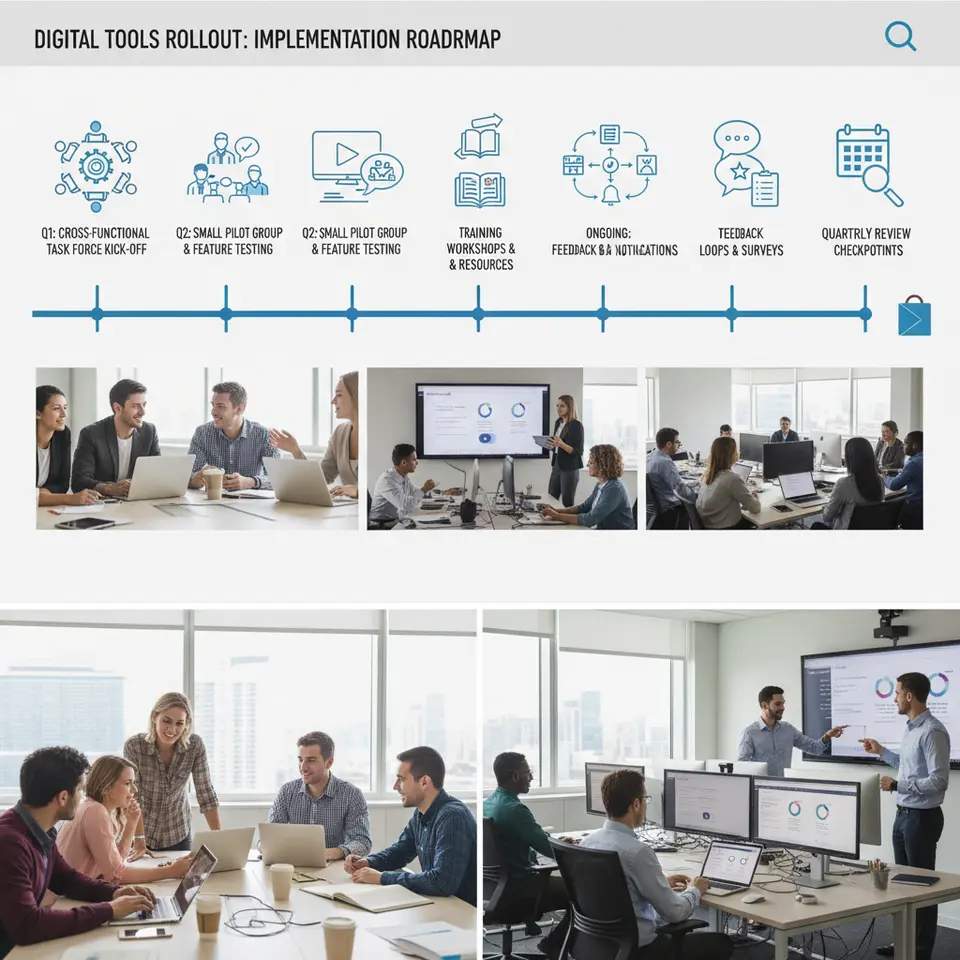
Strategy and selection are only the first steps—effective deployment and integration ensure your digital tools resources deliver real-world value. Employ these best practices:
Form an Implementation Task Force
Assemble a cross-functional team including project managers, IT specialists, and power users. Define clear roles and responsibilities to oversee configuration, data migration, and user training.
Adopt a Phased Rollout
Begin with a pilot group to validate workflows, permissions, and customizations. Gather feedback, address any issues, and refine processes before scaling solutions organization-wide.
Develop Comprehensive Training Resources
Create step-by-step guides, short video tutorials, and interactive workshops. Encourage knowledge sharing by designating internal champions who can mentor colleagues.
Automate Key Processes
Leverage low-code platforms or built-in workflow engines to connect your tools. Implement triggers that automatically route tasks, send alerts, or update records based on predefined criteria.
Maintain Open Feedback Channels
Collect user feedback through surveys, focus groups, or regular check-ins. Use this input to optimize configurations, adjust training materials, and identify opportunities for deeper integration.
Schedule Periodic Reviews
In today’s dynamic environment, requirements shift rapidly. Conduct quarterly audits of tool usage, performance metrics, and cost impact to ensure your suite of digital tools resources continues to align with evolving business objectives.
By following a disciplined onboarding and integration approach, you minimize disruptions, accelerate user adoption, and maximize the return on investment in your digital tools resources.
Conclusion
Successfully navigating the landscape of digital tools resources requires a methodical approach—from understanding essential characteristics and benefits to conducting rigorous research, evaluation, and implementation. By defining clear objectives, engaging stakeholders, and leveraging best practices for onboarding and integration, organizations can assemble a powerful technology stack that drives collaboration, productivity, and data-driven decision making. As you deploy and refine your toolkit in 2026, maintain a continuous feedback loop and stay informed about emerging trends in AI, automation, and security. With the right mix of digital tools resources tailored to your workflows, your team will be well-positioned to innovate, scale, and achieve sustainable growth in today’s competitive digital era.
Frequently Asked Questions
1. How do digital tools specifically improve educational focus?
By demanding attention to data details and complex system interactions, utilizing these platforms acts as an organizational grounding exercise. It forces the administration to slow down, block out external distractions, and concentrate entirely on a single, intricate communication subject, which directly builds institutional endurance and focus.
2. Why is digital workflow considered a mindfulness practice in education?
Workflow architecture requires profound patience and exact precision. When staff study how a communication chain is assembled piece by piece over many hours, they naturally adopt a slower, more deliberate mental pace. This steady, rhythmic approach to administration perfectly mirrors traditional mindfulness and system organization techniques.
3. Can learning about digital tools reduce staff anxiety?
Yes. By shifting the staff’s perspective from rushing for an immediate outcome to appreciating the long, meticulous process of system creation, leaders help lower workplace stress. The predictable, logical nature of automated platforms provides a comforting mental framework during high-pressure academic periods.
4. What specific departments benefit most from this methodology?
While highly adaptable, this method works exceptionally well in admissions and communications by providing tangible frameworks for abstract engagement concepts. It also deeply enriches student success departments by offering digital artifacts that represent the pinnacle of targeted support and intervention.
5. How do we prevent this technology from becoming impersonal in the school?
The key is to strictly focus the setup on the personalization, support, and human connection involved, completely ignoring the generic mass-marketing templates. Frame digital tools as supreme examples of human problem-solving and customized care rather than mere symbols of corporate automation.
6. Are there accessible ways to teach this to administrative staff?
Absolutely. The internet provides an abundance of high-definition tutorials, interactive platform sandboxes, and detailed strategic webinars about digital tools. These digital resources are incredibly effective at capturing staff attention and demonstrating the necessary digital precision.
7. How does this connect to building long-term academic discipline?
The creation of fine digital ecosystems proves that excellence cannot be rushed or faked. Staff learn that shortcuts lead to failure in an automated workflow, just as they do in education. This realization fosters a deep, intrinsic motivation to apply rigorous discipline to their daily operational habits.
8. What is the most important lesson learned from automated systems?
Users learn the vital concept of interconnectedness. They clearly see how one tiny data tag syncing successfully is completely dependent on the preceding form submission. This directly translates to their operations, showing them how foundational organization supports all future, more advanced engagement endeavors.
9. Why is a calm environment necessary for studying complex software?
The human brain cannot deeply analyze complex digital systems while in a state of high stress or distraction. Studying these platforms naturally forces the user to seek out and maintain a quiet, calm environment, training them to manage their own workspace atmosphere effectively.
10. How quickly can schools see improvements in communication focus?
While deep organizational changes take time, leaders often notice an immediate shift in team atmosphere when introducing highly organized visual workflows related to these platforms. The inherent fascination with how these software systems work captures attention instantly, providing a foundation for building long-term strategic focus.