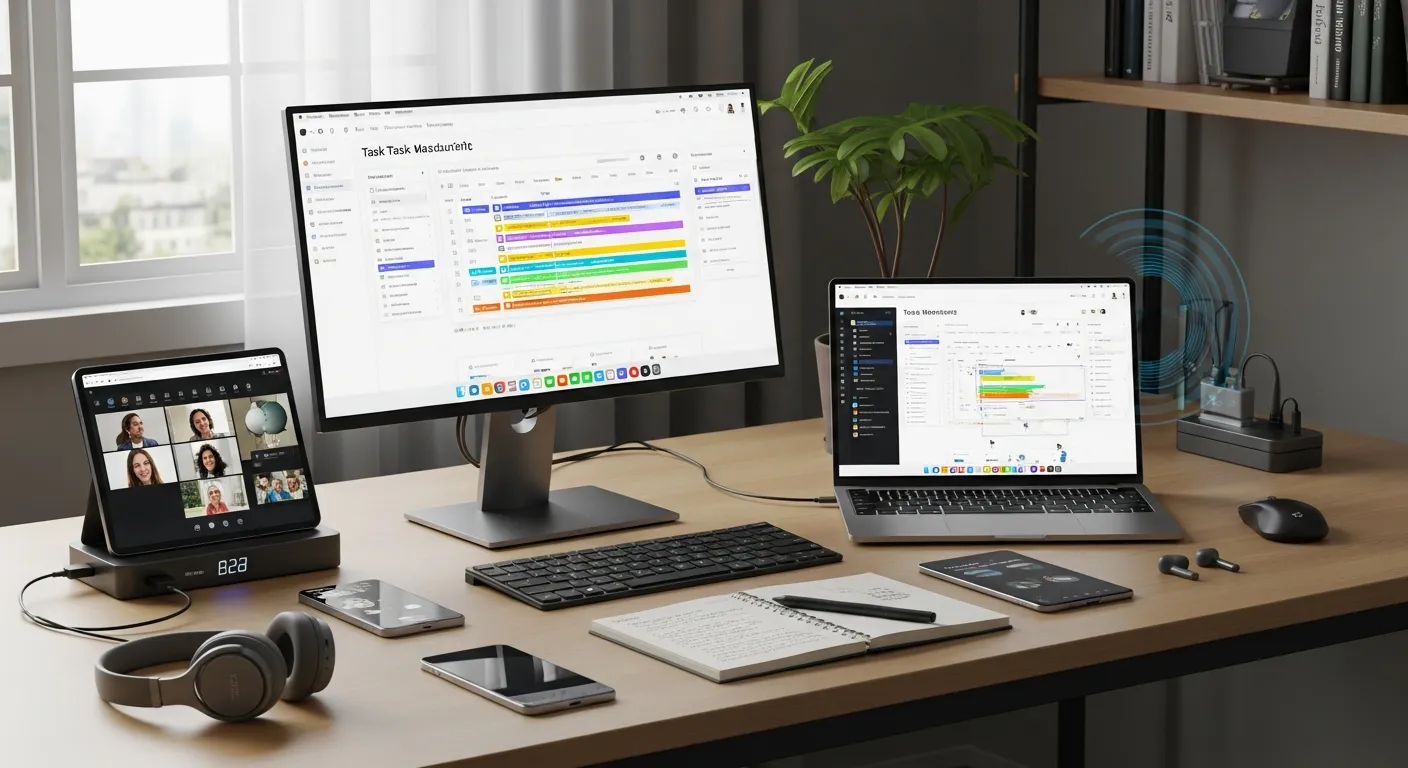
Struggling to manage your daily tasks? Implementing the right digital productivity tools transforms chaotic schedules into streamlined workflows, helping you achieve peak efficiency and focus immediately.
This comprehensive guide breaks down the most effective digital productivity tools available. You will discover actionable strategies to select the right software, explore detailed comparisons, learn expert implementation tips, and uncover proven methods to eliminate distractions and supercharge your daily output.
Why You Need Digital Productivity Tools Right Now

Managing work without a dedicated system leaves you vulnerable to missed deadlines, lost information, and overwhelming stress. Digital productivity tools serve as your external brain. They capture tasks, organize resources, and automate repetitive actions so you can focus entirely on high-value work. Using digital productivity tools shifts your mindset from reacting to emergencies to proactively designing your success.
The human brain excels at generating ideas but fails at storing them. When you rely solely on your memory to track assignments, you consume massive amounts of cognitive energy. Digital productivity tools relieve this mental burden. They provide a centralized dashboard where you can view every commitment, delegate responsibilities, and monitor progress. Professionals who leverage digital productivity tools consistently report lower anxiety levels and higher job satisfaction because they trust their systems completely.
Organizations also depend heavily on digital productivity tools to align remote and hybrid teams. Without a unified digital workspace, communication fractures. Emails get buried, files disappear, and projects stall. Adopting robust digital productivity tools ensures everyone accesses the same information simultaneously. This transparency accelerates decision-making and fosters a culture of accountability. Integrating these systems with solid time management strategies allows you to reclaim hours of lost time every single week.
Mini-Conclusion: Embracing digital productivity tools eliminates cognitive overload and centralizes your workflow. By delegating task tracking to reliable software, you free your mind to focus on creative problem-solving and strategic growth.
Core Categories of Digital Productivity Tools
You cannot rely on a single application to handle every aspect of your professional life. The most effective workflows combine specialized digital productivity tools that communicate with each other. Understanding these core categories helps you build a custom software stack tailored perfectly to your unique needs.
Task and Project Management Software
Task management platforms represent the foundation of all digital productivity tools. These applications allow you to break massive projects into actionable, bite-sized steps. You assign deadlines, attach relevant files, and tag collaborators directly within the task card. This visibility ensures nothing slips through the cracks.
When using these digital productivity tools, you should adopt visual methodologies like Kanban boards or Gantt charts. Moving a task from “To Do” to “Done” provides a powerful psychological reward that builds momentum. You establish a clear roadmap for your day, week, and month. Leveraging these platforms alongside proven project management frameworks guarantees you hit your milestones consistently without last-minute scrambling.
Time Tracking and Focus Applications
You cannot optimize what you do not measure. Time tracking software acts as an essential subset of digital productivity tools. These applications run quietly in the background, recording exactly how you spend your work hours. Reviewing this data often reveals uncomfortable truths about where your time actually goes.
Once you identify your biggest time-wasters, you can use focus applications to block distracting websites. Many of these digital productivity tools use the Pomodoro technique, forcing you to work in intense 25-minute sprints followed by short breaks. Research from the American Psychological Association shows that structured breaks drastically improve focus and prevent cognitive fatigue. Combining time trackers with website blockers creates an impenetrable fortress around your attention.
Communication and Collaboration Platforms
Modern work requires seamless communication. The era of managing projects via endless email chains is over. Collaborative digital productivity tools provide dedicated channels for specific topics, ensuring conversations remain organized and searchable. You can quickly launch video calls, share screens, and resolve complex issues in minutes instead of days.
These digital productivity tools also support asynchronous work. You can record a quick video update or leave a detailed voice note for a colleague in another time zone. This flexibility eliminates the need for constant, disruptive meetings. By centralizing your communication, you keep your inbox clean and maintain a deep state of focus for longer periods.
Cloud Storage and Knowledge Management
Information acts as the lifeblood of any project. If you cannot find a crucial document, your entire workflow stops. Cloud storage solutions and knowledge management wikis are vital digital productivity tools that organize your data logically. You create a single source of truth for your entire operation.
Effective knowledge management tools allow you to interlink documents, creating a web of related information. When you search for a specific client, you instantly see their contracts, meeting notes, and project deliverables on one page. Integrating these databases with your daily workflow automation processes ensures you never waste time hunting for misplaced files again.
Mini-Conclusion: Building a powerful workflow requires a mix of specialized software. By combining task managers, time trackers, communication hubs, and knowledge databases, you create a holistic ecosystem of digital productivity tools that supports your success.
How to Choose the Right Digital Productivity Tools

The software market overflows with thousands of applications claiming to solve all your problems. Selecting the right digital productivity tools requires a strategic, highly critical approach. You must evaluate software based on your specific requirements rather than flashy marketing promises.
Identify Your Core Bottlenecks
Never adopt digital productivity tools simply because they are popular. Start by analyzing your current workflow to identify specific bottlenecks. Do you struggle to remember deadlines? Do you waste hours searching for files? Does your team duplicate work due to poor communication?
Once you pinpoint the exact problem, seek out digital productivity tools designed to solve that specific issue. If email overload kills your efficiency, look for a specialized inbox triage tool. If collaborative writing causes version control nightmares, adopt a real-time document editor. Matching the tool directly to the pain point guarantees a high return on your investment.
Evaluate Integration Capabilities
Digital productivity tools must communicate with each other to provide maximum value. If your task manager cannot sync with your calendar, you create extra manual work for yourself. Always prioritize software that boasts robust integration capabilities.
Look for tools that connect natively to the applications you already use. Additionally, check if the software integrates with third-party automation platforms like Zapier. A highly connected suite of digital productivity tools eliminates data silos and allows information to flow seamlessly across your entire organization. According to Harvard Business Review, seamless digital integration significantly boosts employee output and reduces operational friction.
Prioritize User Experience and Simplicity
Complex software destroys efficiency. If digital productivity tools require a 10-hour training course to understand, you will eventually abandon them. The best applications feature intuitive, minimalist interfaces that feel natural immediately.
Test the software extensively during the free trial period. Evaluate how many clicks it takes to perform a basic action. If adding a simple task feels cumbersome, the tool fails the simplicity test. Choose digital productivity tools that get out of your way and let you focus entirely on the actual work.
Mini-Conclusion: Selecting software requires careful analysis of your pain points, integration needs, and user experience preferences. By choosing intuitive, highly connected digital productivity tools, you ensure long-term adoption and massive workflow improvements.
Comparison of Top Digital Productivity Tools
To help you navigate the crowded software landscape, we compared several leading digital productivity tools. This breakdown highlights the ideal use cases, core strengths, and potential drawbacks of the most popular platforms available today.
Task Management Comparison
|
Tool Name |
Best Used For |
Core Strength |
Potential Drawback |
|---|---|---|---|
|
Todoist |
Personal task tracking |
Lightning-fast natural language input |
Limited advanced reporting |
|
Asana |
Team project coordination |
Beautiful, clear timeline views |
Can feel overwhelming for solo users |
|
Trello |
Visual workflow management |
Simple, intuitive Kanban boards |
Struggles with highly complex project hierarchies |
|
Notion |
All-in-one workspaces |
Unmatched customization |
Steep learning curve to build initial systems |
Time Tracking Comparison
|
Tool Name |
Best Used For |
Core Strength |
Potential Drawback |
|---|---|---|---|
|
Toggl Track |
Freelancers and agencies |
Effortless one-click time tracking |
Premium features get expensive |
|
Clockify |
Budget-conscious teams |
Completely free core tracking features |
Interface feels slightly outdated |
|
RescueTime |
Automatic habit analysis |
Runs silently in the background |
Can feel invasive to privacy-conscious users |
|
Forest |
Gamified focus sessions |
highly motivating visual rewards |
Lacks deep analytical reporting |
Mini-Conclusion: No single application rules them all. By comparing the strengths and weaknesses of different digital productivity tools, you can pinpoint the exact software that aligns with your specific working style and budget.
Step-by-Step Guide to Implementing Digital Productivity Tools
Purchasing software is easy; actually using it requires discipline. Successfully implementing digital productivity tools demands a structured onboarding process. Follow these exact steps to transition smoothly and start seeing immediate efficiency gains.
Step 1: Audit and Cleanse Your Current Data
Before moving into new digital productivity tools, you must clean your existing data. Do not migrate outdated files, completed tasks, or irrelevant emails into your new system. Treat this transition like moving to a new house. Throw away the garbage before you pack the boxes.
Spend a few hours archiving old projects. Delete duplicate files. Clarify your naming conventions. Starting with a clean slate ensures your new digital productivity tools remain fast, searchable, and highly organized from day one.
Step 2: Establish Clear Usage Rules
If you work with a team, you must establish strict guidelines on how to use the new digital productivity tools. Software turns into chaos if everyone uses it differently. Document exactly where specific conversations should happen. Define how files should be named and where they should be stored.
Create an internal playbook that outlines these rules. When you standardize the usage of your digital productivity tools, you eliminate confusion. Everyone knows exactly where to look for information, which drastically reduces internal friction and speeds up project delivery.
Step 3: Start Small and Scale Gradually
Do not try to automate your entire life on the first day. Start by moving one specific workflow into your new digital productivity tools. Perhaps you begin by managing only your weekly marketing content in the new task manager.
Master the basic features before exploring advanced automations. Once you feel completely comfortable with the core functionality, slowly introduce more complex processes. This gradual scaling prevents overwhelm and ensures you build sustainable habits around your digital productivity tools.
Step 4: Schedule Weekly System Maintenance
Digital productivity tools require regular maintenance to remain effective. Without consistent pruning, your task manager will fill up with overdue, irrelevant items. You must schedule a dedicated 30-minute block every Friday afternoon to review your systems.
During this weekly review, process your inbox to zero. Reschedule missed tasks. Update project statuses. This brief maintenance session keeps your digital productivity tools accurate and trustworthy. When Monday morning arrives, you can dive straight into execution without worrying about broken systems.
Mini-Conclusion: Successful implementation requires data cleansing, clear rules, gradual scaling, and consistent weekly maintenance. Following these steps guarantees your digital productivity tools deliver massive value instead of becoming another source of stress.
Common Mistakes to Avoid with Digital Productivity Tools

Even highly motivated professionals frequently misuse their software. Falling into these common traps completely negates the benefits of your systems. Learn to recognize and avoid these fatal errors when using digital productivity tools.
The Over-Complication Trap
Many users spend hours building elaborate, hyper-complex systems inside their digital productivity tools. They create endless nested folders, dozens of color-coded tags, and highly convoluted automation rules. This over-engineering destroys efficiency.
Your system should be as simple as possible. If maintaining your digital productivity tools takes more time than doing the actual work, you have failed. Strip away unnecessary tags and folders. Stick to basic, flat hierarchies. Simplicity scales; complexity breaks.
App Hopping and Shiny Object Syndrome
The software industry constantly releases new digital productivity tools promising to revolutionize your workflow. This leads to “shiny object syndrome,” where users constantly abandon their current software to try the newest app.
App hopping kills momentum. Every time you switch platforms, you lose hours transferring data and learning a new interface. Pick reliable digital productivity tools and stick with them for at least six months. Consistency with an average tool always beats inconsistency with a perfect tool.
Ignoring the Human Element
Software cannot fix bad habits. If you constantly procrastinate, ignore deadlines, or refuse to delegate, no amount of digital productivity tools will save you. You must address the underlying behavioral issues first.
Use digital productivity tools to support good habits, not to replace them. Pair your software with strong personal discipline. Read resources from authorities like Forbes on how to blend technological efficiency with strong leadership and emotional intelligence.
Mini-Conclusion: Avoid over-complicating your setup, constantly switching apps, and relying on software to fix behavioral flaws. By keeping things simple and consistent, you extract the true power of your digital productivity tools.
Expert Tips for Maximizing Digital Productivity Tools
Top performers extract massive value from their software by using advanced strategies. Implementing these expert tips elevates your workflow from average to exceptional, allowing you to dominate your daily tasks using digital productivity tools.
Automate Repetitive Admin Tasks
You should never perform the same administrative action twice. Use the automation features within your digital productivity tools to handle routine busywork. Set up rules that automatically assign tasks to specific team members based on labels.
Create recurring tasks for your weekly reports so you never forget them. Connect your web forms to your database so new leads populate automatically. By automating the mundane, you turn your digital productivity tools into a tireless robotic assistant that works around the clock.
Use the Two-Minute Rule
Integrate the two-minute rule directly into your triage process. When reviewing notifications in your digital productivity tools, ask yourself: “Can I resolve this in less than two minutes?” If the answer is yes, do it immediately.
Do not schedule a tiny task for later. Do not move it to another list. Just execute it. This strategy clears out massive amounts of digital clutter rapidly. It keeps your digital productivity tools focused exclusively on deep, meaningful work rather than a graveyard of minor errands.
Centralize Your Intake Funnel
Information hits you from multiple angles: emails, text messages, meeting notes, and casual conversations. You must channel all these inputs into a single intake funnel within your digital productivity tools.
Designate one specific application as your universal inbox. Whenever an idea or request arrives, dump it immediately into that central hub. During your daily review, you can process that single inbox and organize the items into their proper projects. This centralization guarantees zero dropped balls. Implementing solid business process optimization techniques around this funnel ensures maximum efficiency.
Mini-Conclusion: By automating routine actions, executing quick tasks immediately, and centralizing your information intake, you master your software. These expert strategies transform digital productivity tools into engines of unstoppable momentum.
Conclusion
Mastering your daily workflow requires the right systems and unwavering discipline. By implementing powerful digital productivity tools, you eliminate chaos, automate tedious tasks, and create a centralized hub for your success. Stop relying on your memory and start leveraging technology today. Audit your workflow, select your core applications, and take immediate control of your professional growth to achieve ultimate efficiency.
FAQs
1. What are digital productivity tools?
Digital productivity tools are software applications designed to help individuals and teams manage tasks, track time, organize information, and communicate efficiently. These tools streamline workflows, automate repetitive actions, and provide centralized dashboards to ensure projects are completed accurately and on time.
2. How do digital productivity tools improve daily efficiency?
They improve efficiency by serving as an external brain. Instead of wasting cognitive energy remembering deadlines or searching for files, you rely on the software to organize everything. Digital productivity tools free up your mental bandwidth so you can focus entirely on executing high-value, deep work.
3. Which digital productivity tools are best for personal task management?
For personal use, tools like Todoist, TickTick, and Apple Reminders are excellent. They offer fast, natural language input, intuitive interfaces, and mobile synchronization. These digital productivity tools allow you to quickly capture personal errands and daily work goals without getting bogged down in complex project management features.
4. How many digital productivity tools should I use at once?
You should use as few as possible to get the job done. A standard stack includes one task manager, one calendar, one communication hub, and one note-taking app. Using too many digital productivity tools leads to scattered data and integration headaches, which ultimately destroys your efficiency.
5. Are free digital productivity tools good enough for professional work?
Yes, many platforms offer robust free tiers perfectly suited for freelancers or solo professionals. Tools like Asana, Trello, and Clockify provide massive value without a subscription. You only need to upgrade to paid digital productivity tools when you require advanced reporting, complex automations, or large-scale team collaboration features.
6. How do I stop myself from constantly switching digital productivity tools?
To cure “shiny object syndrome,” commit to using a tool for at least six months before evaluating alternatives. Recognize that the friction you feel is often a workflow problem, not a software problem. Switching digital productivity tools constantly wastes massive amounts of time on data migration and relearning interfaces.
7. Can digital productivity tools help remote teams communicate better?
Absolutely. Applications like Slack, Microsoft Teams, and Zoom are essential digital productivity tools for remote work. They provide organized, searchable channels for specific projects and allow for asynchronous communication via video and voice notes, entirely eliminating the need for long, disruptive email chains.
8. What is the biggest mistake people make when setting up digital productivity tools?
The biggest mistake is over-complication. Users often build overly complex hierarchies with dozens of tags, folders, and rigid rules. When digital productivity tools become too difficult to maintain, users abandon them. Always favor a simple, flat structure that requires minimal clicks to operate.
9. How do time-tracking digital productivity tools prevent burnout?
Time trackers provide objective data on how much you actually work. They reveal if you are consistently working late or skipping breaks. Many of these digital productivity tools also feature Pomodoro timers that force you to step away from your screen, preventing cognitive fatigue and maintaining sustainable energy levels.
10. How often should I organize and review my digital productivity tools?
You should conduct a brief daily review to plan your next 24 hours, and a deeper 30-minute review every Friday. This weekly maintenance session involves archiving old projects, updating task statuses, and clearing your digital inboxes. Consistent reviews keep your digital productivity tools accurate and reliable.