Are you searching for the best way to guide your children toward building habits that set them up for lifelong success? If so, mastering how to teach kids time management is your foundation. Helping children gain control over their routines cultivates independence, focus, self-esteem, and a lower-stress environment for the whole family. In this guide, you’ll unlock proven steps, inspiring stories, and expert strategies that go far beyond generic advice.
This in-depth article explores how to teach kids time management across all ages, including toddlers, elementary students, and teens. You’ll uncover the science behind routines, practical examples for home and school, real-world mistakes to avoid, cutting-edge tools (analog and digital), and actionable expert tips. By the end, you’ll confidently build a calm, productive system that supports your child’s growth and happiness.
Imagine a home where mornings are smooth, homework gets done without tears, and your child heads into the world ready to tackle each challenge with confidence. Good time management skills don’t just happen; they’re taught step by step. While children aren’t born with an internal clock, deliberate support transforms chaos into calm—and that’s what this guide is all about.
Whether your primary goal is academic achievement, less family stress, or preparing kids for adult life, everything starts with building healthy habits early. Let’s dive into exactly how to teach kids time management, using research-backed methods and real-life success stories.
The Role of Time Management in Childhood Success

Time management is more than simply sticking to a schedule. It teaches kids discipline, problem-solving, accountability, and resilience. These are foundational for educational achievement, emotional health, and long-term happiness.
Research from the Child Mind Institute and education experts shows that consistent routines don’t just improve grades—they reduce anxiety, increase self-confidence, and lower the chance of academic burnout. In a world that’s increasingly fast-paced and full of distractions, helping kids manage their time is an investment that pays dividends for a lifetime.
What Happens When Kids Lack These Skills?
You might notice more meltdowns, battles over chores, incomplete homework, and chronic lateness. These aren’t just behavioral issues—they’re often signals that kids feel overwhelmed or unprepared. By teaching them how to break big tasks into steps and plan, you give them tools to solve everyday problems more independently.
Understanding Development: Why Kids Need Guidance
Before expecting kids to manage their schedules, it’s vital to appreciate the science of child development:
- Young children live in the present: Their sense of time is limited to “now” and “not now.” Expecting them to estimate 10 minutes or remember an upcoming event is unrealistic.
- Executive function grows over years: Planning, sequencing, and shifting focus aren’t fully developed until late adolescence.
- Role models matter: Kids naturally “mirror” how adults approach tasks.
This is why structured guidance, not just “telling,” is crucial.
Building a Foundation: Routines, Rituals, and Predictability
Introducing simple routines as early as possible paves the way for all future time management. Children thrive when they know what to expect. Predictable rituals (like family dinners, consistent bedtimes, or after-school checklists) provide security and mental space for learning, creativity, and relaxation.
The Psychology Behind Predictable Routines
When kids know what comes next, their brains don’t waste energy on uncertainty. Lower stress equals better focus and memory retention. According to the Centers for Disease Control and Prevention, routines support emotional stability and academic performance—and the benefits grow over time.
Pro tip: Use routines as flexible frameworks, not rigid schedules. For example, if mornings are hectic, a simple checklist (“Brush teeth, get dressed, eat breakfast, pack lunch”) eliminates reminders and arguments.
Teaching Time Concepts: Laying the Groundwork with Young Children
Ages 3–5: Learning by Seeing and Doing
For preschoolers and toddlers, time is still a mystery. Here’s how to introduce it:
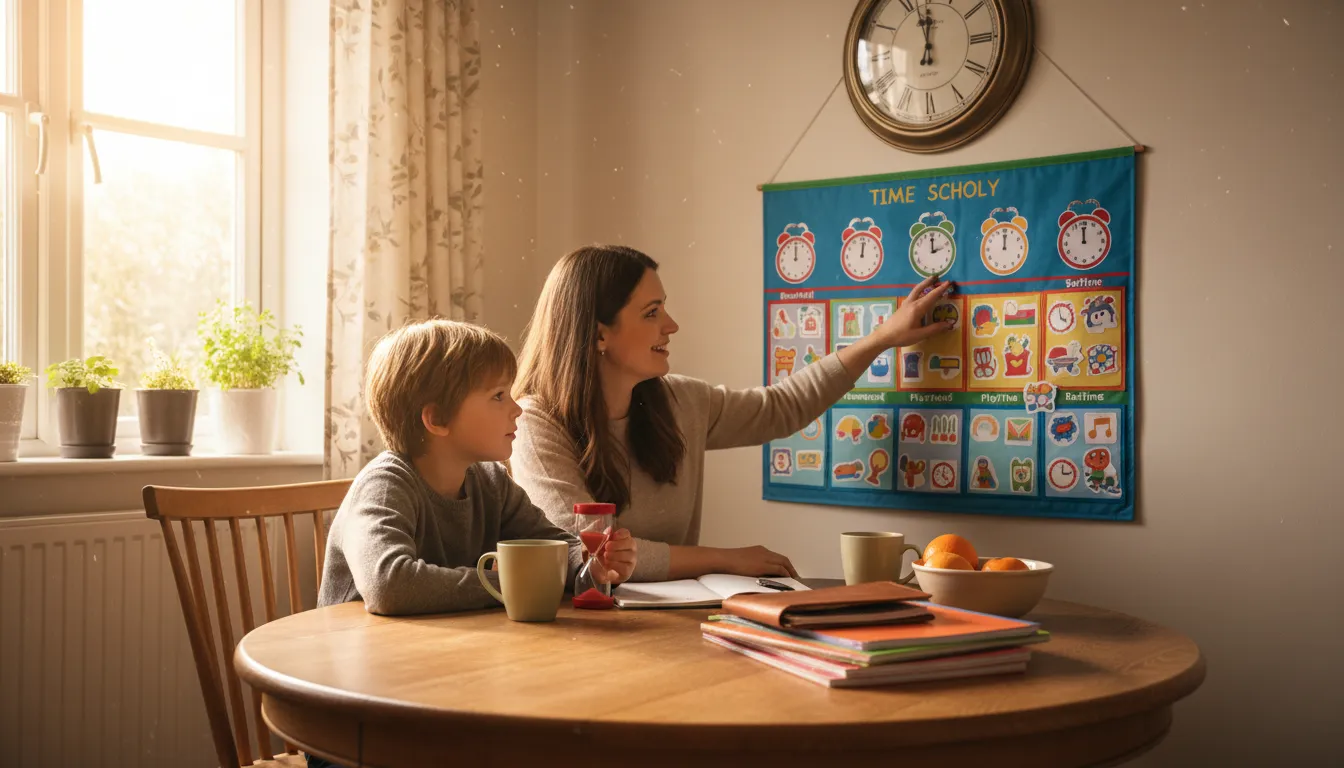
- Visual routine charts: Pictures (toothbrush, pajamas, bed) help them grasp sequences.
- Sand or liquid timers: Watching time “run out” concretizes abstract minutes.
- “First, then” language: Say “First we pick up toys, then we have a snack.” This builds a basic concept of order.
- Song timers: Silly clean-up songs signal when an activity ends.
Sample Morning Routine Chart for a 4-Year-Old
- Wake up (sun icon)
- Brush teeth (toothbrush icon)
- Get dressed (shirt icon)
- Breakfast (bowl icon)
- Pack bag (backpack icon)
- Goodbye hugs (heart icon)
Place this on the fridge or bedroom wall. Children love checking each step and will begin self-initiating tasks over time.
Elementary School: Building Skills, One Block at a Time

Once your child starts school, add layers to their responsibility. Research shows that time management skills in the elementary years boost performance more than raw intelligence alone.
Actionable Tips and Habits
- Teach analog clock reading: Visual-spatial understanding is crucial. Use real clocks, not just digital.
- Create homework blocks: Set a timer for 20 minutes of focused work, followed by a 5-minute break. The Pomodoro technique, adapted for children, enhances attention spans.
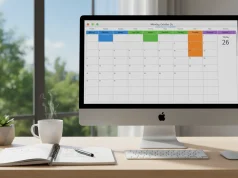
- Use family calendars: Write after-school events and assignment due dates on a shared board. Let kids add their own items to promote ownership.
Balancing Structured and Free Time
Don’t overload your child with endless scheduled activities. Free play is essential for creativity and emotional well-being. Guide your child to fit homework, chores, free time, and family commitments in a visible, gentle routine.
The Preteen Challenge: Building Independence with Tweens
As kids approach ages 9-12, give them more choices:
- Introduce planners or diaries: Paper or digital tools let kids log assignments and make basic to-do lists.
- Weekly planning sessions: Every Sunday, sit down together and preview the week. Ask what they want to prioritize (“Which project will be hardest? What can we do first to avoid stress?”).
- Allow natural consequences: If they forget their lunch, let them experience the mild discomfort instead of rescuing every time. Discuss what could help next time.
- Encourage check-ins, not lectures: “How did your system work for you this week? Want to change anything?”
Teenagers: Shifting from Parental Manager to Mentor
Teens require autonomy but still need guidance:
- Empower with digital tools: Calendar apps with reminders give teens control and help with organization.
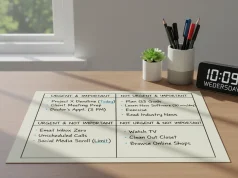
- Teach task prioritization: The Eisenhower Matrix—urgent vs. important—helps teens avoid last-minute cramming or wasted hours on trivial tasks.
- Stress management: Talk about energy levels, sleep patterns, and realistic scheduling for part-time jobs, sports, and social commitments.
- Reflect and revise: Ask open-ended questions—“What tripped you up this week? How do you want to handle it next time?”
Classroom Connections: How Educators Can Support at School
Teachers play a key role in reinforcing time management:
- Use visible schedules: Display the day’s agenda to lower anxiety.
- Build in transition warnings: “Ten minutes until recess” cues kids to start winding down.
- Model list-making: Show students how to break projects into steps.
- Encourage peer-to-peer strategies: Group work helps kids learn how others organize tasks.
Explore Truth For Teachers’ guide for more detailed teaching strategies.
Common Mistakes Parents Make (and How to Avoid Them)
Everyone slips sometimes. Here’s what to watch for:
- Micromanaging: Scheduling every minute leaves no room for kids to problem-solve. Offer support, but let them experiment (and even forget) sometimes.
- Overbooking: Kids need downtime! Free play, rest, and family chats are as important as any structured activity.
- Punishing with time: Avoid using timers as threats (“Clean your room in five minutes or else!”). Let time be a neutral tool.
- Disregarding body clocks: Some kids are morning people; others focus best later in the day. Adapt where possible to their natural peaks.
Advanced Tools: Analog vs. Digital for Every Age
Choosing the right system depends on your child’s age, learning style, and circumstances.
|
Feature |
Analog Tools |
Digital Tools |
Best For |
|---|---|---|---|
|
Tactile Engagement |
Writing improves memory retention |
Less engagement, quick edits |
Visual/kinesthetic learners, young children |
|
Accessibility |
Always visible (wall/desk) |
Requires device |
Family sharing, shared household routines |
|
Distraction Level |
Zero screen distractions |
Risk of app/game distraction |
Kids with focus issues |
|
Automation |
Manual updates |
Auto reminders/alarms |
Teens with busy/variable schedules |
|
Portability |
Easy for simple tasks |
Sync across platforms |
On-the-go families, tech-comfortable teens |
Combine both for best results—post a weekly planner in the kitchen plus app reminders for teens.
Expert Insights: Voices from the Field
Dr. Jennifer Scott, Child Psychologist
“Let kids be part of the planning, not just recipients. Personal ownership over choice builds lasting habits.”
Angela Watson, National Board Certified Educator
“Time management is a lifelong experiment. Share your struggles and systems transparently—kids learn more from watching you adapt than from lectures.”
Case Study: Homework Transformation
A 9-year-old who always procrastinated learned to break big assignments into 15-minute sessions. After a month, her end-of-week stress disappeared, and her grades improved. Her parents reported fewer arguments and more laughter at home.
How to Keep Kids Motivated (and Calm)

Focus on Progress, Not Perfection
Praise your child’s effort for using their checklist or planner even if the week wasn’t flawless. Discuss what worked and why, then adjust together.
Introduce Gamification and Rewards
Younger kids respond to sticker charts and “beat the timer” games. For older kids, a reward might be extra weekend screen time or choice over a family dinner menu.
Align Time Management with Passions
If your child loves art or sports, schedule those things as reward or anchor points. “Once homework’s done, you get 30 minutes to draw before dinner.”
Family Rituals
Build weekly review sessions into your family routine: “Let’s check the calendar together and plan our week.” This models teamwork and planning for the future.
Pro Tips for Lasting Change
- Start with morning and bedtime routines—these ‘anchors’ influence the rest of the day.
- Use technology wisely—apps are powerful but need parental boundaries and oversight.
- Adjust for learning differences—kids with ADHD may need more visuals, regular check-ins, and gentle nudges.
- Share setbacks—discuss times you lost track of time and how you fixed it. Kids value honesty.
- Praise creativity—if your child invents a new way to organize chores, try it out!
- Encourage journaling for older kids to reflect on what helped them feel successful each week.
Real-World Scenarios: Applying Time Management at Home
The Busy School Morning
Set up a “launch pad” by the door: backpacks, shoes, and packed lunches ready the night before eliminate last-minute panics.
The Reluctant Homeworker
Turn off distractions, set a 15-minute timer, then offer a favorite snack as a break. Repeat as needed until homework is complete.
The Overbooked Teen
Review the week’s activities together. Help your teen identify if any can be dropped or combined. Suggest downtime before bedtime to support better sleep.
Resources and Advanced Strategies
For families seeking extra support:
- Explore interactive planners for students for printable charts and digital tracker ideas.
- Read guidance from St. Paul’s Schools on building skills through simple routines.
- Consult Sekolah Pelita Harapan for integrating time management and prioritization with cultural and faith-based approaches.
Internal Tip: For advice on problem-solving skills, see our article on teaching children to overcome obstacles. If screen time management is a struggle, check out our guide on digital wellness for kids for more family balance solutions.
Conclusion
Investing in how to teach kids time management changes lives—not just schedules. With the right routines, positive modeling, and gentle nudges, you empower your kids to create order, find calm, and approach life’s challenges with confidence and focus. Start today, adapt as your child grows, and celebrate every small win. The skills you’re supporting now will carry your children through school, relationships, and future workplaces—one routine at a time.
Ready to raise a calmer, happier, and more independent learner? Start building your family’s time management system today.
FAQs
What is the best age to start teaching organizational skills?
You can begin introducing basic concepts as early as age three. Use visual timers and simple routines to help toddlers understand the sequence of events, setting the stage for more advanced skills later.
How do I help a child with ADHD manage their schedule?
Children with ADHD benefit greatly from highly visual and tactile tools. Break tasks into very small, manageable steps, use frequent short breaks, and provide immediate, positive reinforcement for staying on track.
Should I pay my child for finishing tasks on schedule?
Intrinsic motivation is always stronger than extrinsic rewards. Instead of paying them, use natural rewards. For example, finishing homework early means having extra time to play a favorite game or read a book together.
My teenager ignores their planner. What should I do?
Allow them to experience the natural consequences of their choices. If they miss a deadline because they did not write it down, let them handle the fallout with their teacher. Afterward, offer to help them find a system that actually works for them, like a digital app.
How much unscheduled free time does a child need?
Experts recommend at least one to two hours of unstructured free time daily. This downtime is crucial for imaginative play, stress relief, and allowing the brain to process the day’s events.
Are digital calendars better than paper planners?
It depends entirely on the child. Younger children typically do better with physical, paper planners because writing helps with memory. Teenagers often prefer digital calendars because they sync with their phones and offer automated reminders.
How can I make morning routines less stressful?
Preparation is the key to calm mornings. Have your child pack their backpack, lay out their clothes, and prepare their lunch the night before. Create a simple, visual checklist for them to follow as soon as they wake up.
What is the Pomodoro Technique?
The Pomodoro Technique is a productivity method where you work for a focused period (usually 25 minutes for adults, 10-15 minutes for children), followed by a short 5-minute break. It helps maintain high levels of focus without causing mental fatigue.
Why does my child procrastinate on big projects?
Procrastination is often a symptom of feeling overwhelmed, not laziness. Children may not know where to start. Help them break the large project down into tiny, actionable steps to make it feel less intimidating.
How do I stop nagging my kids to do their chores?
Shift the responsibility to a visual system. Create a daily checklist or chore chart. When you see a chore is not done, simply ask, “Have you checked your chart today?” This removes the emotional friction and places the responsibility back on the child.